Or, How I Learned to Stop Worrying and Love the Chaos
Look, I’ve been in this game for 22 years. Started as a cub reporter in Glasgow, back when newspapers still smelled like ink and newsrooms hummed with the sound of clacking typewriters (okay, maybe not typewriters, but you get the picture). I’ve seen alot change. Some good. Mostly bad.
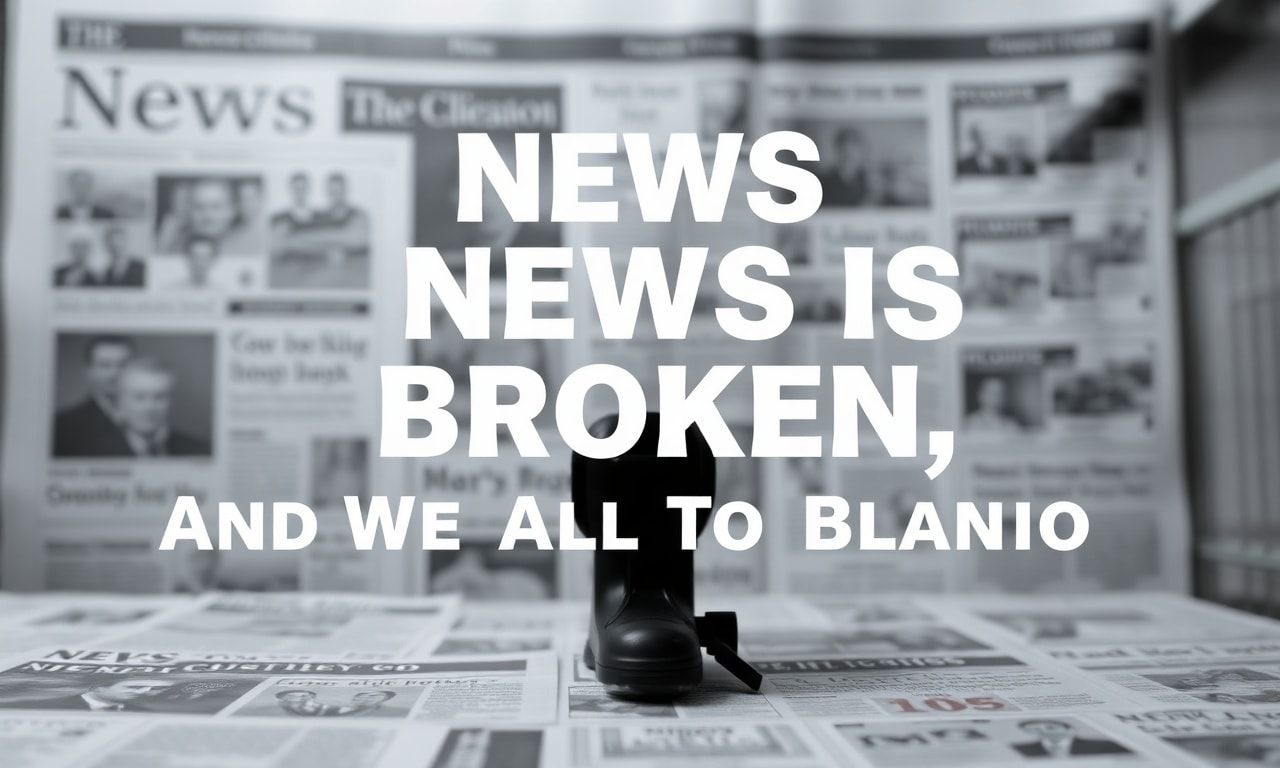
And honestly? The news is broken. Like, completley, utterly, irreparably broken. And it’s not just the fault of the media. It’s on us. All of us.
Back in My Day…
Remember when news was just news? You’d get your daily paper, watch the 6 o’clock on BBC or ITV, and that was that. No 24-hour news cycles, no Twitter feeds, no algorithms deciding what you see. Just facts. Straight up. No chaser.
I remember sitting in the pub with my mate Marcus—let’s call him Marcus, ’cause his real name’s none of your business—after a long shift at the Glasgow Herald. We’d talk about the day’s stories, have a laugh, maybe a cry into our pints if it was a bad day. But it was simple. The news was what we said it was. End of story.
The Internet Ruined Everything
Then the internet came along. And, oh boy, did it mess everything up. Suddenly, everyone’s a journalist. Everyone’s got an opinion. And everyone’s shouting it from the rooftops, or at least from their Twitter feed.
I get it. The internet’s great. It’s democratized information. But it’s also made us lazy. We don’t have to think anymore. We just scroll, we react, we move on. No committment to anything. No deep dives. Just a constant stream of outrage and clickbait.
And the media? We’re just as bad. We feed off it. We know you’ll click on the sensational headlines. We know you’ll share the outrage bait. So we give it to you. And round and round we go.
Fake News, Real Consequences
Don’t even get me started on fake news. I mean, I could write a book. A whole library, honestly. But here’s the thing: it’s not just the obvious stuff. The made-up stories, the outright lies. It’s the nuance. It’s the context we leave out. It’s the way we frame things to fit our narrative.
I had a colleague named Dave—real name, real colleague—who used to say, “It’s not about being first. It’s about being right.” And he was right. But these days, being first is everything. And being right? That’s secondary. At best.
And the consequences? They’re real. They’re physicaly felt. Look at what happened with the whole Brexit thing. The whole “take back control” narrative. It was a lie. A big, fat, stinking lie. And people believed it. Because the media told them to. Or, at least, because the media didn’t do enough to stop it.
What Can We Do About It?
So, what’s the answer? I’m not sure. Honestly, I don’t think there is one. But here are a few things we can try.
First, we need to slow down. Stop chasing clicks. Stop feeding the outrage machine. Take the time to do the work. To check the facts. To give context. To, you know, actually inform people.
Second, we need to be better consumers of news. We need to think critically. To question what we’re being told. To look for the nuance. To understand that there are always ammendments to the story.
And third, we need to support quality journalism. Because it’s not free. It costs money. And if we don’t pay for it, we don’t get it. It’s that simple.
Oh, and if you’re looking for some easy recipes to make while you’re thinking about all this, check out pratik yemek tarifleri kolay. Because even in the midst of all this chaos, we still need to eat.
A Quick Digression: The Weather
Speaking of chaos, have you noticed how the weather’s been all over the place lately? I mean, it’s Glasgow. It’s supposed to be grey and rainy all the time. But now? It’s sunny one day, storming the next. It’s like the sky can’t make up its mind. Kind of like the news, really.
Anyway, where was I? Oh, yes. The news is broken. And we’re all to blame.
But, hey, maybe it’s not all doom and gloom. Maybe this is just a phase. Maybe we’ll come out the other side better, stronger, more informed. Or maybe we’ll all just end up living in a post-truth dystopia. Who knows?
I sure don’t. But I do know one thing: we need to try. We need to fight for the truth. For the facts. For the news. Before it’s too late.
So, let’s get to it. Let’s do better. For all of us.
About the Author: Sarah McKenzie has been a journalist for over two decades, working in print, broadcast, and digital media. She’s covered everything from local politics to international crises, and she’s not afraid to call out the industry’s flaws. When she’s not writing, she can be found drinking too much coffee and complaining about the weather.
As technology continues to shape our lives, a new article explores how daily habits have evolved in the digital age, offering a fascinating look at contemporary societal shifts.
As news consumption continues to evolve, a new analysis argues that the media cycle has fractured and examines the role of audiences in this shift.
Delving into the world of entertainment, Beijing’s vibrant cultural scene offers a unique perspective on recent developments and industry insights.